The utilities sector is under pressure with state-sponsored attacks on water systems, new federal isolation guidance, and AI-driven demand on the grid. These challenges are pushing utilities to rethink how they protect critical infrastructure, while aging systems complicate the long-term picture.
Below are four trends that I believe are shaping the utilities sector this year and what they mean for organizations working to protect critical infrastructure.
Trend one: Cyber threats are shifting critical infrastructure guidance
Overview:
Recent activity from Chinese state-sponsored actors targeting U.S. critical infrastructure is driving new warnings and guidance around operational resilience.
What happened:
The response:
Why it matters:
CI Fortify represents a shift in how organizations approach cyber resilience. Rather than focusing solely on preventing breaches, utilities need to be prepared to isolate compromised systems and maintain essential operations during an attack.
However, years of connecting operational technology (OT) with corporate IT have created complex dependencies, meaning simply disconnecting a network can also disrupt critical services.
The guidance emphasizes:
- Pre-engineered isolation: Know what to disconnect, where and when.
- Recovery capabilities: Maintain essential operations while systems are isolated.
- Testing: Identify hidden dependencies before an incident occurs.
The goal now goes beyond just keeping attackers out. Now, it’s about keeping critical services running when attackers find a way in.
Trend two: Recent water attacks are putting utility resilience to the test
Overview:
While CI Fortify is shifting how utilities are advised to prepare for cyberattacks, recent attacks on U.S. water systems show why that guidance matters more than ever.
What happened:
On July 26–27, more than 30 Minnesota water systems were hit in a coordinated cyberattack attempting to contaminate water sources.[4] Some utilities lost automated controls and were forced into manual operations; at least one municipal well and treatment plant were temporarily taken offline.
The attacks targeted internet-exposed programmable logic controllers (PLCs), which is technology used to control physical water operations.[5] CyberAv3ngers, an Iran-linked group with a history of targeting water infrastructure, is among the suspected attackers.[6]
Why it matters:
The incidents demonstrate that utilities of all sizes can face operational disruption when internet-connected OT is exposed. CISA has warned that attackers are targeting exposed systems, default credentials, and weak network segmentation, meaning disruption does not necessarily require highly sophisticated vulnerabilities.
The attacks reinforce the same principle highlighted by CI Fortify: utilities need the ability to secure, isolate, and recover critical systems when unauthorized access occurs.
Cybersecurity cannot stop at just preventing unauthorized access. Security, segmentation, isolation, and recovery need to be built into the technology architecture from the start, especially as attacks increase and escalate.
Trend three: AI-driven power demand is accelerating the modernization of the U.S. grid
Overview:
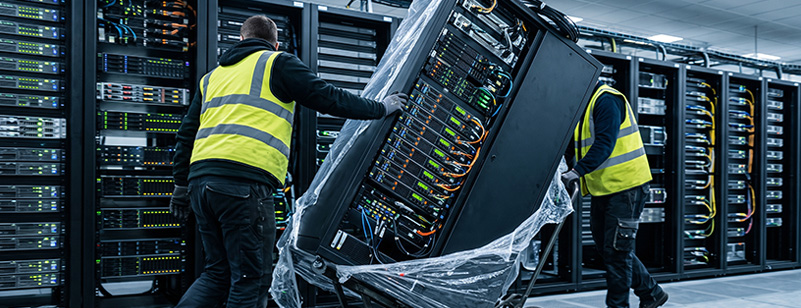
AI and data centers are creating unprecedented demand for electricity, putting new pressure on utilities to expand and modernize the infrastructure that powers the digital economy.
What’s happening:
Why it matters:
AI-driven electricity demand is pushing utilities to:
- Expand generation and grid capacity to meet rapidly growing demand
- Modernize transmission and distribution infrastructure
- Connect new generation and large customers faster
- Maintain reliability and resilience as the grid becomes more complex
The regulatory environment is evolving alongside this demand. In June 2026, the Federal Energy Regulatory Commission (FERC) directed six major regional grid operators to justify or reform interconnection processes for large loads of 20 MW or more, reflecting growing pressure to accommodate large electricity users more efficiently.
AI is turning electricity infrastructure into a technology challenge. The rapid expansion of data centers is creating a multi-year infrastructure buildout that requires utilities to modernize while maintaining reliability, security, and resilience.
Trend four: Aging gas infrastructure is becoming increasingly expensive as utilities transition toward electrification
Overview:
As the U.S. transitions toward a more electrified energy system, utilities continue to spend heavily to maintain aging gas infrastructure, raising questions about the long-term value of those investments.
What’s happening:
Aging U.S. gas infrastructure is driving roughly $37 billion in annual replacement costs, with new gas lines costing $1 million–$10 million per mile.[10] Utilities are continuing to replace aging pipelines, even as electrification accelerates and long-term plans target reduced gas use. New gas infrastructure can last 80+ years, meaning customers could be paying for investments into the 2080s or later, while many decarbonization plans target significantly less gas use by 2050.[11]
Why it matters:
Utilities have alternatives to replacing aging gas infrastructure. They can repair, replace, or retire gas lines while supporting customer electrification, but each approach carries different costs and tradeoffs.
Current incentives still favor replacement, as traditional utility regulation rewards capital investment; more than 40 states have programs that accelerate gas pipeline replacement.[12] At the same time, electrification is shifting investment toward the electric grid, requiring utilities to expand generation, transmission, and distribution capacity.
These competing priorities make long-term infrastructure decisions more complex. Infrastructure built today may remain in service for decades, even as customer demand and the energy mix change.
Utilities must balance today’s reliability and safety needs with tomorrow’s energy systems. Now is the time for organizations to make key infrastructural decisions and investments that will impact their futures for years to come.
The bigger picture and how SAP NS2 can help
The common thread across these trends is clear: utilities cannot modernize infrastructure without modernizing the technology foundations that support it. Whether responding to cyberattacks, managing increasingly connected environments, scaling the grid to meet AI-driven demand, or navigating long-term infrastructure investments, utilities need secure, resilient technology built for highly regulated environments.
SAP NS2 helps regulated organizations build that foundation.
Through secure cloud environments and SAP solutions for data, analytics and business operations, SAP NS2 can help utilities:
- Protect critical systems and data with secure, scalable, and complaint cloud environments designed for sensitive workloads.
- Connect data across complex environments, helping teams integrate information from infrastructure, operations, and business systems.
- Turn data into actionable insights with analytics that help utilities monitor performance, identify risks, and make better-informed infrastructure decisions.
- Modernize mission-critical applications and workflows while supporting the operational continuity utilities depend on.
As utilities modernize under growing pressure, the right technology foundation can make the difference between reacting to change and preparing for it. SAP NS2 can securely modernize, connect critical data and systems, and navigate the evolving demands of the utilities landscape.
Explore how SAP NS2 can help utilities securely modernize and prepare for what’s next.